
Coverage that reaches past the last bar of signal
On a working farm or ranch, the places you most need to reach someone are exactly the places with no service: the back pasture, the bottom of a draw, the far end of a section at dusk.
- per node, one purchase, no monthly fee
- $25–60
- typical reach per hop across open ground
- 1–9 miles
- a barn or windmill repeater runs indefinitely
- Solar
per node, one purchase, no monthly fee
typical reach per hop across open ground
a barn or windmill repeater runs indefinitely
The problem
The coverage map stops at the county road
Carrier coverage follows population and highways. A thousand-acre operation twenty minutes off the farm-to-market road is not a business case for anyone, so the bars disappear the moment you leave the house, and stay gone until you come back.
The workarounds are all bad. Handheld radios cover a mile or two and nobody hears you over the cab noise. Driving back to the house to relay a message costs half an hour. Satellite messengers cost a subscription per person, per year, forever. And during a storm or a grid outage, every one of these gets worse at the same time.
What the mesh changes
One antenna on something tall covers the whole operation
Put a solar-powered repeater on a barn roof, a windmill, a grain leg, or a hilltop, anywhere with height and sky. Every handheld node within reach of it now talks to every other node within reach of it, whether or not they can hear each other directly.
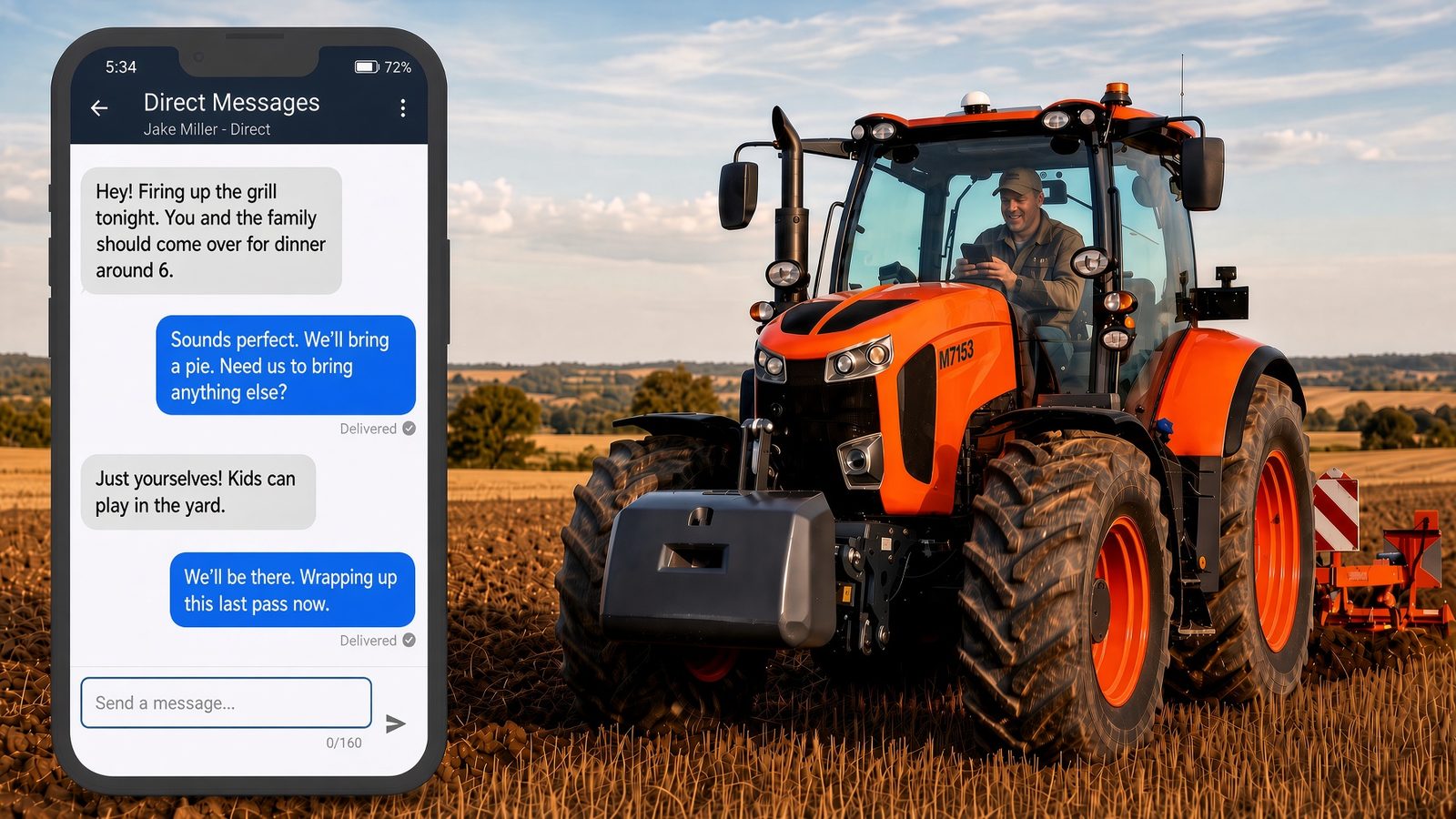
Everyone carries a small radio paired to the phone they already have. Messages go through from the tractor, from the pens, from the truck on the far fence line. Nobody signs up for anything, and there is no bill next month.
Neighbouring operations that put up their own repeaters extend the mesh for each other without any coordination, which is how a county-scale network grows out of a series of entirely selfish decisions.
A day on a mesh-covered operation
None of this requires anyone to think about the network. It just means the message goes through.
05:40
Crew assignments
Field assignments go out on a channel before anyone leaves the yard. People read them whenever their radio comes into range, nothing is missed because someone left early.
11:15
Breakdown in the back section
A hydraulic line goes on the far side of the property. One message with the part number and a position reaches the shop, four hops away, in seconds.
16:30
Livestock and gates
Gate open, cattle in the wrong pasture, water tank low. Short messages with coordinates, sent from wherever the person is standing.
18:00
Family logistics
Dinner at six, bring the trailer up the back road. The mundane traffic that makes a network worth carrying every day, which is what makes it there in an emergency.
What a working deployment looks like
One high repeater
A solar node with a good antenna on the tallest structure you own. This single install usually determines whether the whole property is covered or half of it is.
A node per vehicle and person
Cheap boards in the trucks, tractors, and shirt pockets, paired over Bluetooth to phones. These need almost no maintenance beyond charging.
Sensors, if you want them
LoRa nodes can report tank levels, gate states, and soil telemetry on the same network, small, infrequent packets are exactly what the radio is good at.
Set expectations honestly